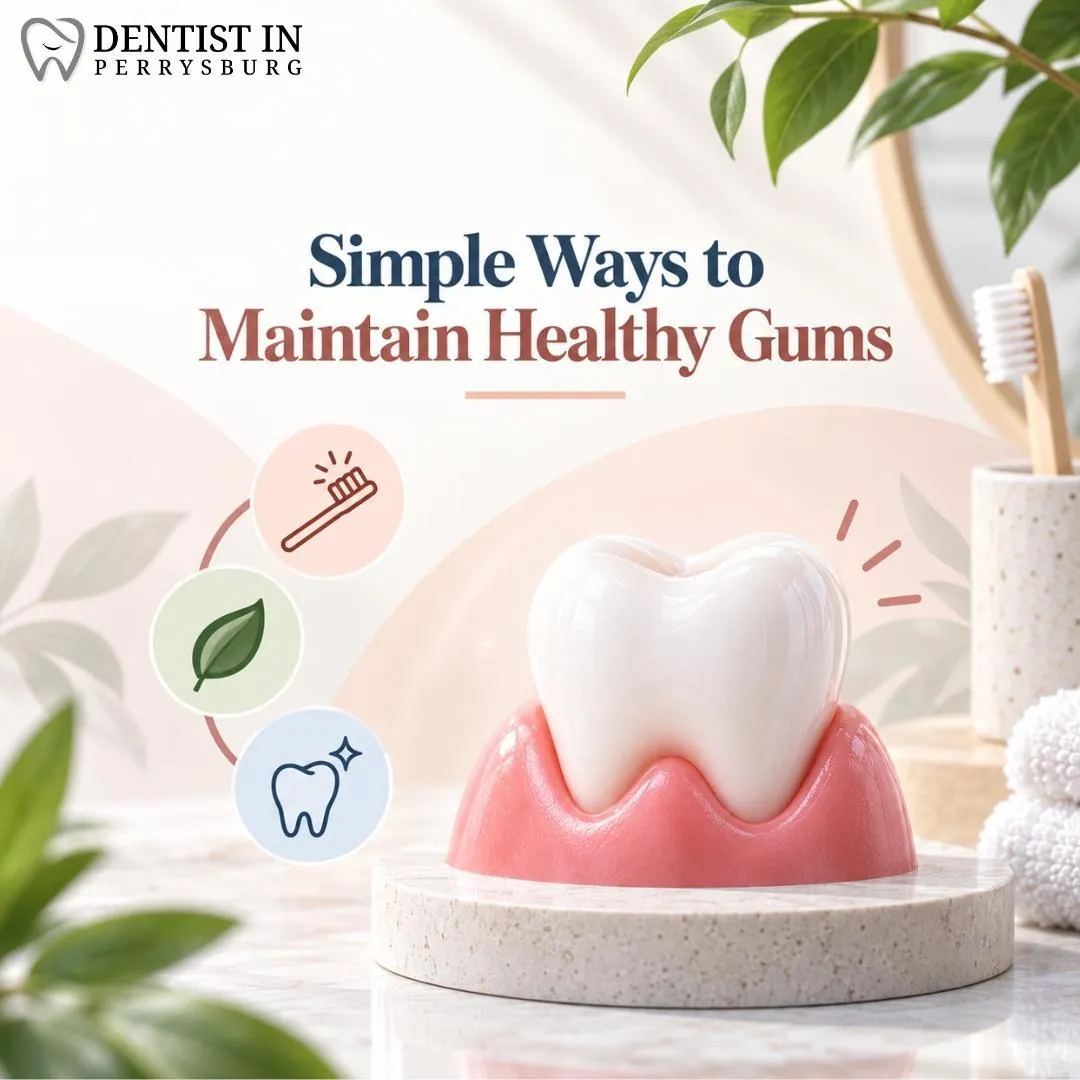
Many people notice bleeding gums after brushing or flossing. They also deal with bad breath and sore gums. These signs can make daily life hard.
Brush twice a day with fluoride toothpaste to keep plaque low and protect teeth and gums. Floss once daily and clean between teeth to remove food that a toothbrush misses. Using mouthwash can cut bacteria and freshen breath.
The guide covers oral hygiene, toothbrush care, flossing tips, mouthwash use, healthy diet ideas, and smoking cessation steps. It also explains why regular dental care matters.
To keep gums healthy, daily habits play a crucial role. Regular brushing and flossing remove plaque and reduce the risk of gum disease.
Brushing teeth twice a day with fluoride toothpaste is essential for maintaining oral hygiene. This routine helps remove plaque and food particles that can cause gum disease. People should brush for at least two minutes each time and pay attention to the gumline. They must also scrub their tongues during brushing, as bacteria can linger there and contribute to gum problems.
Flossing once daily is equally important. It cleans between teeth where a toothbrush cannot reach; this removes food debris and plaque buildup. Using proper flossing techniques ensures effective cleaning without injuring the gums.
With consistent practice, these habits significantly improve gum health and prevent serious dental issues like cavities or periodontal disease. Next, lifestyle choices play a vital role in better gum health.
Brushing and flossing alone may not be enough for optimal gum care. Mouthwash plays an important role in maintaining healthy gums. It helps eliminate bacteria that linger in the mouth after brushing. This action reduces plaque buildup and freshens breath at the same time.
Incorporating mouthwash into a daily routine can enhance oral hygiene efforts. Rinsing with mouthwash after brushing removes any remaining food particles and plaque, supporting overall dental health.
Some formulas include fluoride for extra protection against cavities, ensuring strong teeth as well. For best results, choose an alcohol-free option to avoid drying out the mouth while still keeping gums healthy.
A worn-out toothbrush can harm gum health. People should replace their toothbrush every three to four months or sooner if the bristles fray. A new toothbrush effectively removes plaque and food particles, promoting optimal oral hygiene. Brushing twice a day with fluoride toothpaste keeps teeth strong and healthy.
Flossing daily also plays a vital role in maintaining fresh gums. It cleans areas that a toothbrush cannot reach, helping to prevent cavities and gum disease. Many overlook tongue cleaning during brushing, yet it helps remove bacteria that contribute to gum problems; scrubbing the tongue is important for complete oral care.
Lifestyle choices play a big role in gum health. Avoiding tobacco products and eating nutritious foods help keep gums strong and healthy.
Tobacco products harm gums and teeth. Smoking or vaping increases the risk of gum disease. It can lead to inflammation and decay, which causes pain and tooth loss. These substances reduce blood flow to the gums. This weakens their ability to heal and fight infections.
Cutting out tobacco supports healthy gums. A balanced diet, along with staying hydrated, helps maintain oral health too. This combination strengthens gum tissue, preventing issues down the line. Regular dental checkups remain crucial for monitoring any changes in gum health after quitting tobacco.
A balanced diet plays a crucial role in maintaining healthy gums. Foods rich in vitamins and minerals support gum health and help prevent gum disease. Fruits, vegetables, whole grains, and lean proteins provide essential nutrients. These foods also strengthen the immune system to fight infections that can affect oral hygiene.
Staying hydrated is equally important for gum care. Drinking enough water helps wash away food particles and bacteria from the mouth. It also promotes saliva production, which neutralizes acids that can harm teeth and gums.
Keeping hydrated supports overall dental health by reducing dry mouth conditions that lead to plaque build-up. Regular dental checkups ensure early detection of potential issues and maintain good oral hygiene practices effectively.
Regular dental checkups help catch gum problems early. These visits ensure that a dentist removes plaque build-up and checks for signs of gum disease.
Routine dental checkups and cleanings play a crucial role in maintaining gum health. Dentists assess the gums during these visits, checking for signs of gum disease. Regular visits help catch potential issues early. Patients can reduce the risk of serious problems by attending these appointments.
Dentists also provide professional cleanings that remove plaque buildup from hard-to-reach areas. This process is essential for preventing cavities and ensuring healthy gums. Many people find that they leave feeling refreshed after a cleaning session; it boosts their confidence and promotes better oral hygiene practices at home.
Regular dental checkups allow for early detection of gum issues. Dentists examine gums and teeth during these visits. They can spot signs of plaque accumulation, cavities, or gum disease before they worsen.
Patients should visit their dentist routinely to monitor gum health. These appointments help catch potential problems early.
Maintaining proper oral hygiene also prevents many issues. Brushing twice a day with fluoride toothpaste keeps gums healthy and free from plaque buildup. Flossing once daily removes food particles between teeth that a toothbrush may miss, enhancing overall gum care.
A balanced diet supports strong gums as well; hydration is essential too. Drinking enough water aids in maintaining optimal oral health and functions properly for the gums.
Practice daily oral hygiene. Brush twice with fluoride toothpaste using a soft-bristled toothbrush. Flossing once a day removes plaque. Rinse with mouthwash if your dentist suggests it. Eat a healthy diet and get regular dental care and preventative care.
Flossing pulls plaque from between teeth and along the gum line. It lowers risk of gum disease and cavity. Use waxed floss or dental tape for tight spaces. Do it once a day.
Pick a soft-bristled toothbrush. Brush for two minutes in small circles. Replace the brush every three months. This helps plaque removal and keeps healthy teeth.
Use mouthwash when it fits your oral hygiene plan. Antiseptic or fluoride mouthwash can cut bacteria and help prevent cavities. Mouthwash adds protection but does not replace brushing or flossing.
A healthy diet feeds the gums and boosts dental health. Eat leafy greens, dairy, and lean protein. Cut sugary snacks that feed plaque and raise cavity risk. Drink water to rinse food away.
See a dentist for checkups twice a year. Go sooner for bleeding, pain, or swelling. Early visits stop gum disease and protect long term dental health.
Tell us a little about what you need — we'll be in touch shortly.
110 E South Boundary St, Perrysburg, OH 43551, United States
Hi! I'm Tooth fairy! Your AI Assistant Ask me anything