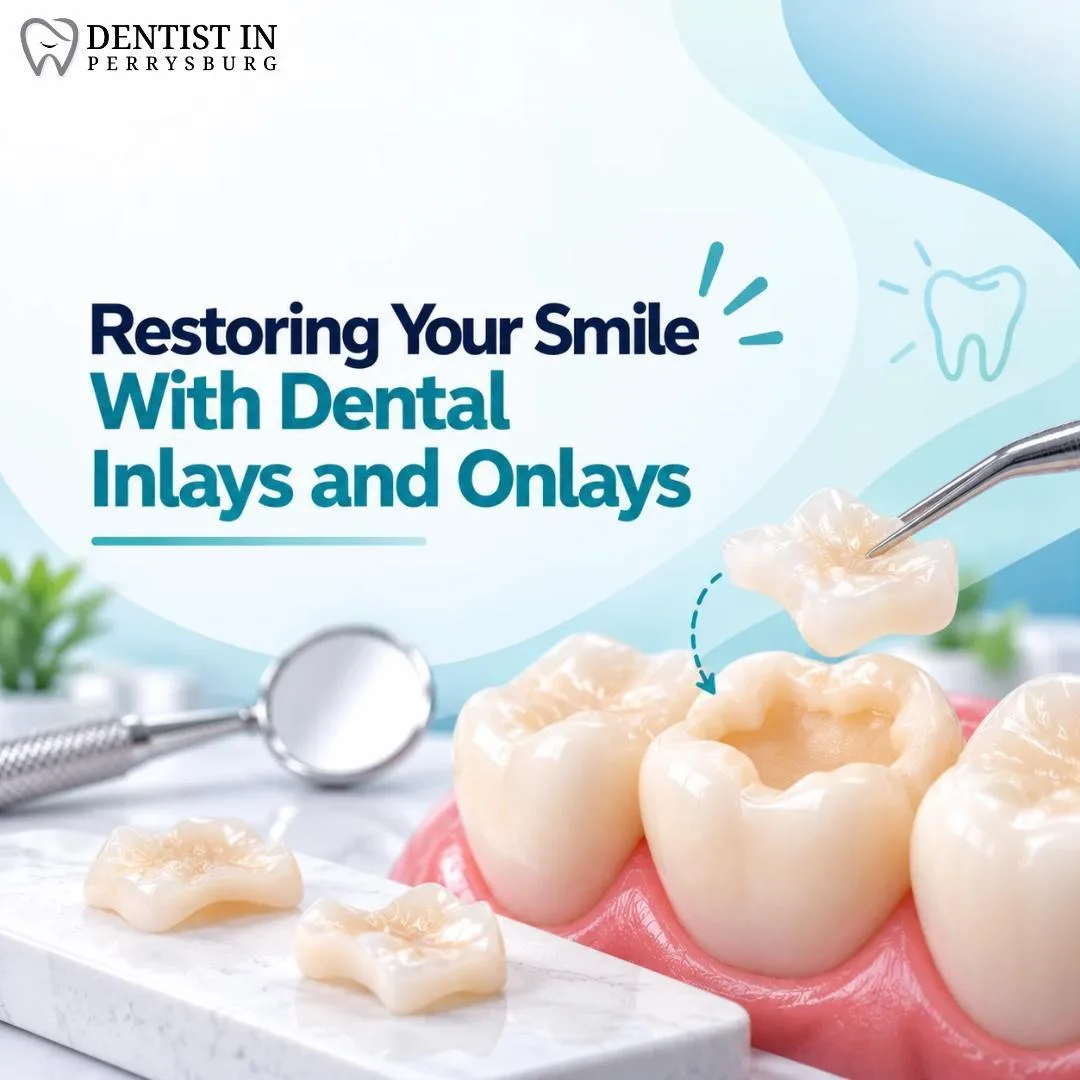
Many people hide their smiles because of cavities or old fillings that leak. Chewing may hurt and food can get stuck. Dental inlays and onlays fix these issues while keeping more of the natural tooth. One fact, they often last longer than regular fillings and can handle strong bite forces.
Here you will know how dentists place inlays and onlays, what the procedure feels like, and how to care for them afterward.
Inlays and onlays fit into and cover damaged parts of a tooth. Dentists place them for dental decay that is too large for fillings but not severe enough for crowns. Inlays sit inside the chewing surface.
Onlays cover one or more cusps and restore bite function and chewing support. Labs craft them from porcelain or composite to match color and protect tooth structure.
A dentist recalls a patient who broke a big filling on a molar. The dentist scanned the tooth, placed a temporary, and cemented an onlay at the second visit. The patient left happy and able to chew meat again.
Patients see these restorations as conservative tooth restoration that boosts oral health and looks natural.
Dental inlays and onlays help teeth stay strong and look great. They support better chewing, making daily eating more comfortable.
Dental inlays and onlays provide remarkable durability. These restorations can last many years, often between 10 to 15 years with proper care. Their strong materials resist wear and tear better than traditional fillings. This means fewer trips to the dentist for repairs or replacements.
Patients appreciate how long these options last. They not only restore tooth structure but also support bite function effectively. Many find that inlays and onlays help maintain oral health over time.
With exceptional strength, they withstand heavy chewing forces without cracking or breaking easily. Investing in this type of restoration pays off by keeping smiles bright for longer periods.
The benefits of dental inlays and onlays extend to preserving natural tooth structure. This approach helps maintain more of the original tooth than traditional fillings or crowns might allow.
Patients often appreciate how these restorations integrate seamlessly with their dental aesthetics.
In a recent case, Lisa opted for inlays after experiencing dental decay. Her dentist emphasized that using this method would keep her tooth intact while restoring function. After the procedure, she felt relieved knowing she retained her natural tooth shape and support for chewing. Such choices make a difference in terms of long-term oral health.
Getting dental inlays and onlays is a straightforward process. Patients can take comfort in knowing that these restorations will enhance their smiles.
These steps highlight how restoring teeth with dental inlays and onlays provides both functionality and aesthetics for lasting results.
Inlays and onlays can restore smiles beautifully. Taking care of these dental restorations is essential for lasting results.
Dental inlays and onlays are restorations used to fix damaged teeth. They fill cavities or cover areas where the tooth structure is missing. Inlays fit inside the tooth, while onlays covers the top and sides.
These treatments repair damage, improve function, and enhance appearance. They blend with your natural teeth for a seamless look. A good restoration can make you feel confident when you smile.
Most patients report minimal discomfort during the procedure. Dentists use local anesthesia to numb the area before starting work; this makes it more comfortable for you.
With proper care, they can last many years, often over a decade! Regular brushing, flossing, and dentist visits will help keep them in great shape for as long as possible.
Tell us a little about what you need — we'll be in touch shortly.
110 E South Boundary St, Perrysburg, OH 43551, United States

Hi! I'm Tooth fairy! Your AI Assistant Ask me anything