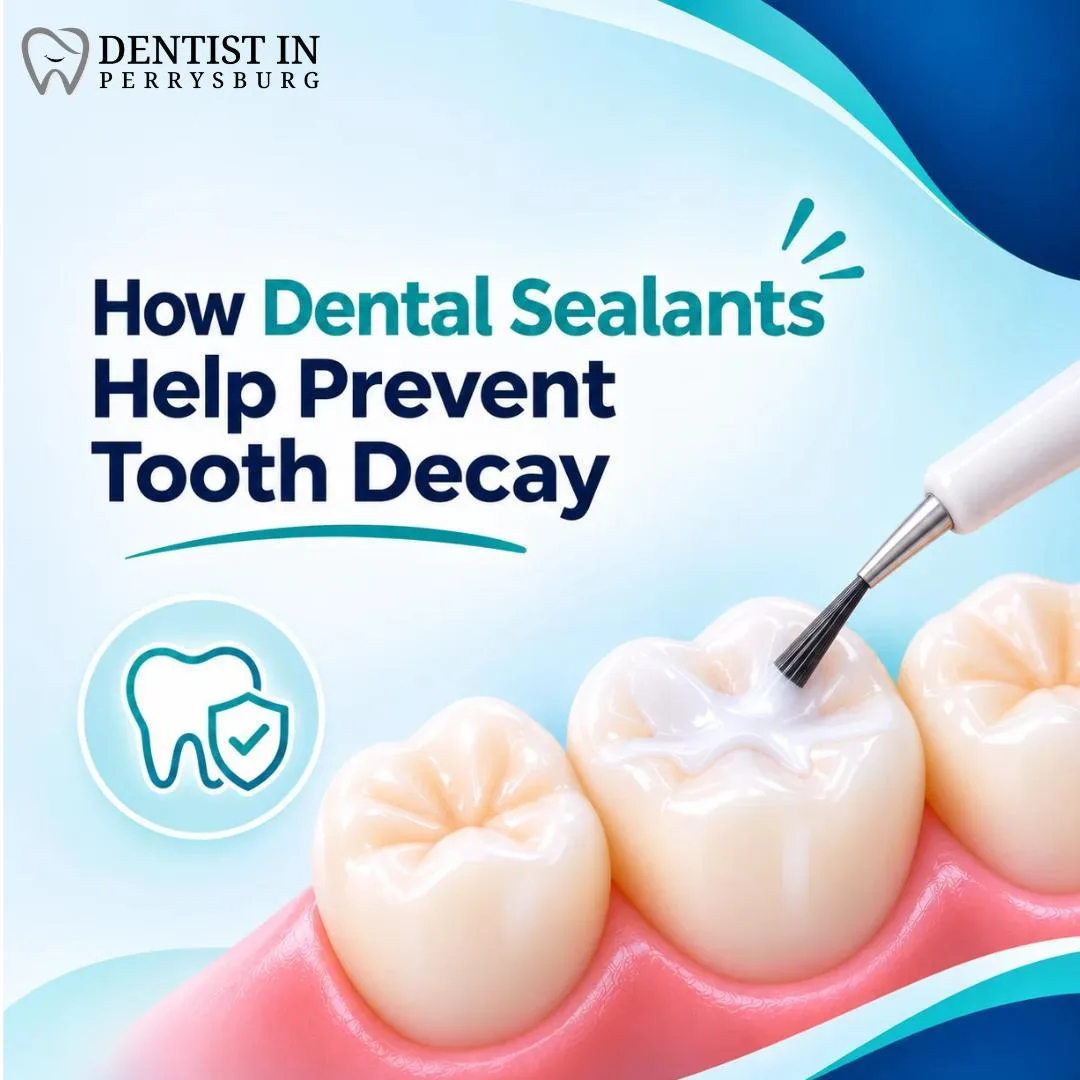
Many parents worry about cavities in their child’s back teeth. Food and plaque hide in deep pits and grooves. Brushing can miss those spots. That leaves teeth open to decay.
Dental sealants can help. They are a glass-like material that slowly releases fluoride to strengthen enamel. Sealants fill grooves and make chewing surfaces smooth.
Dental sealants are a glass-based material that releases fluoride over time to strengthen tooth enamel. Dentists apply them to the chewing surfaces of back teeth to fill deep grooves and pits.
The sealants create a protective barrier that seals off fissures and grooves, blocking food particles and bacteria from entering. Studies show sealants reduce the risk of decay in molars by nearly 80%, a big win for cavity prevention and oral health.
One dentist recalled applying sealants to a child’s newly erupted molars and watching cavity rates drop at follow up visits. Sealants make teeth smoother and easier to clean, which helps with dental hygiene.
They also act as a cost-effective layer of tooth protection, preventing decay-causing agents from penetrating into teeth. Children benefit especially during development, but adults with deep grooves can also gain protection.
Dental sealants create a shield over the chewing surfaces of teeth. This barrier helps stop sugar bugs from setting up camp and causing trouble.
Filling pits and grooves in teeth plays a vital role in preventing tooth decay. Many people have deep grooves on their molars where food particles can easily get trapped. This is especially true for children, whose back teeth may have just erupted.
Dental sealants fill these imperfections with a protective layer that blocks food and bacteria from taking hold.
By covering those tricky spots, sealants reduce the chance of cavities forming by nearly 80%. They offer teeth a smoother surface that makes cleaning easier. Parents often notice that their kids' brushing habits improve after getting sealants.
A simple application keeps smiles bright while promoting better oral hygiene during critical developmental years.
Dental sealants block food particles and bacteria effectively. They cover deep grooves and pits on the chewing surfaces of back teeth. These areas often trap food and plaque, leading to decay.
By sealing them off, sealants create a protective barrier that prevents harmful agents from penetrating the tooth structure.
Sealants can reduce the risk of decay in molars by nearly 80%. This makes them especially useful for children with newly erupted molars. With this added layer, cleaning teeth becomes much easier as it smooths out rough surfaces; thus promoting better dental hygiene.
Dental sealants offer fantastic benefits for oral health. They act as a protective shield against cavities and help keep teeth in top shape.
Sealants provide excellent protection against cavities. They fill deep grooves and pits in molars, where food particles and plaque love to hide. By creating a smooth surface, sealants make teeth easier to clean.
This prevents decay-causing agents from getting in. Studies show that sealants reduce the risk of decay in molars by nearly 80%. For children, this is especially helpful as their teeth are still developing.
Sealants act like a protective barrier, defending vulnerable areas against caries and improving overall oral health.
Dental sealants make oral hygiene a breeze. They fill in deep grooves and pits on teeth where food often hides, making it harder for plaque to settle in. By covering these vulnerable areas, sealants help keep cavities at bay.
This protective layer blocks decay-causing agents from reaching the tooth's surface.triatic
With dental sealants, cleaning becomes easier too. The smoother surface encourages better brushing habits. As a result, both children and adults can maintain cleaner mouths more effectively.
For kids with newly erupted molars, this means they can enjoy their favorite snacks without worrying as much about their teeth!
Improved oral hygiene leads to a deeper discussion about durability. Sealants protect teeth and withstand the test of time. This glass material releases fluoride, which strengthens tooth enamel while preventing decay-causing agents from penetrating.
They fill deep grooves and pits where food often hides, making cleaning teeth simpler and more effective.
Sealants can last for several years with proper care. They reduce cavity risk by nearly 80%, especially in molars. This long-lasting barrier covers vulnerable areas and offers significant protection against cavities for both children and adults.
Their durability makes sealants a wise choice for anyone looking to invest in their dental health over the long haul.
The application process for dental sealants is simple and quick. First, the dentist cleans the tooth thoroughly to get rid of any debris. Next, they apply a special sealant material that fills in those tiny pits and grooves where food can hide.
Dental professionals take great care in cleaning and preparing the tooth before applying sealants. This step is crucial for ensuring a strong bond between the sealant and the tooth surface.
This careful preparation allows dental sealants to effectively block food and bacteria from reaching vulnerable areas of teeth, providing excellent cavity prevention for improved oral health.
Applying dental sealants is a straightforward process. It helps keep teeth safe from decay. Here’s how the procedure unfolds:
Sealants act like an invisible shield, blocking food particles and bacteria from causing trouble in those tricky areas of molars that are prone to decay.
Hardening the sealant is a crucial step in the application process. This step ensures that the protective barrier forms properly on the teeth.
This quick hardening process keeps teeth safe and healthy while providing long-lasting cavity protection during crucial developmental years for children and adults alike.
Kids can really benefit from dental sealants. Those shiny molars with deep grooves are prime spots for cavities. Adults with similar tooth shapes should also consider sealants for extra protection.
Anyone wanting to keep their teeth healthy might want to look into this simple solution.
Children with newly erupted molars face a higher risk of tooth decay. These back teeth have deep grooves and pits where food can easily get trapped. Dental sealants fill these spaces, creating a protective barrier against cavities.
Research shows that sealants can reduce the risk of decay in molars by nearly 80%. This makes them an excellent choice for young smiles.
Applying dental sealants during this stage helps improve oral health significantly. As they promote better hygiene, kids find it easier to keep their teeth clean. Sealants also release fluoride over time, which strengthens tooth enamel and adds extra protection from caries.
Parents should consider this simple preventive measure for their children’s dental care routine.
Adults with deep grooves in teeth face a higher risk of decay. These grooves often trap food and bacteria, creating perfect conditions for cavities. Dental sealants offer a smart solution here.
They fill in those tricky pits, sealing off vulnerable areas that are hard to clean effectively.
By applying sealants on the chewing surfaces, adults can protect their teeth significantly. Studies show that these treatments reduce cavity risks by nearly 80%. Sealants also provide a smoother surface, making it easier to keep teeth clean.
Investing in dental sealants is an effective way for adults to maintain strong oral health and avoid costly dental procedures later on.
Dental sealants are a protective coating applied to the chewing surfaces of teeth. They help fill in grooves and crevices, making it harder for food particles and bacteria to cause tooth decay.
Sealants create a barrier that protects teeth from harmful acids and plaque. By sealing these vulnerable areas, they reduce the risk of cavities forming on molars.
Children and teenagers are prime candidates for dental sealants since their permanent molars typically come in between ages 6 to 12. However, adults without decay can also benefit from this preventive measure.
With proper care, dental sealants can last several years, often up to a decade! Regular check-ups will ensure they remain intact and effective against tooth decay.
Tell us a little about what you need — we'll be in touch shortly.
110 E South Boundary St, Perrysburg, OH 43551, United States
Hi! I'm Tooth fairy! Your AI Assistant Ask me anything